
Background
TDS stands for Total Dissolved Solids. The lower the TDS, the better. A common misconception is that rising permeate TDS means the prefilters (sediment and carbon filters) need replacing — but this is not the case. Prefilters should be replaced on a regular schedule — typically every 4–6 months, though this may vary depending on your water quality and usage volume. When the prefilters clog up with particulates, the pressure drops off and the membrane is less efficient, and when the carbon filters are spent, chlorine can begin to eat away at the membrane.
TDS (Total Dissolved Solids) measures overall water purity — the lower the reading, the cleaner the water. Note: Rising permeate TDS is a sign of membrane wear, not a reason to replace prefilters.
So what is TDS creep?
When water sits in the membrane housing for a duration, TDS rises as it wicks out of the membrane. The initial 30 to 60 seconds when the purifier turns on will send this burst of TDS into your tank or faucet. Each time the RO system turns on, this occurs. This happens to all RO systems, no matter the brand.
How do we avoid TDS creep?
Bluewater purifiers include several built-in features that actively prevent TDS creep:
All Bluewater machines are equipped with automatic flushing to prevent TDS creep!
- Automatic flush sequence.
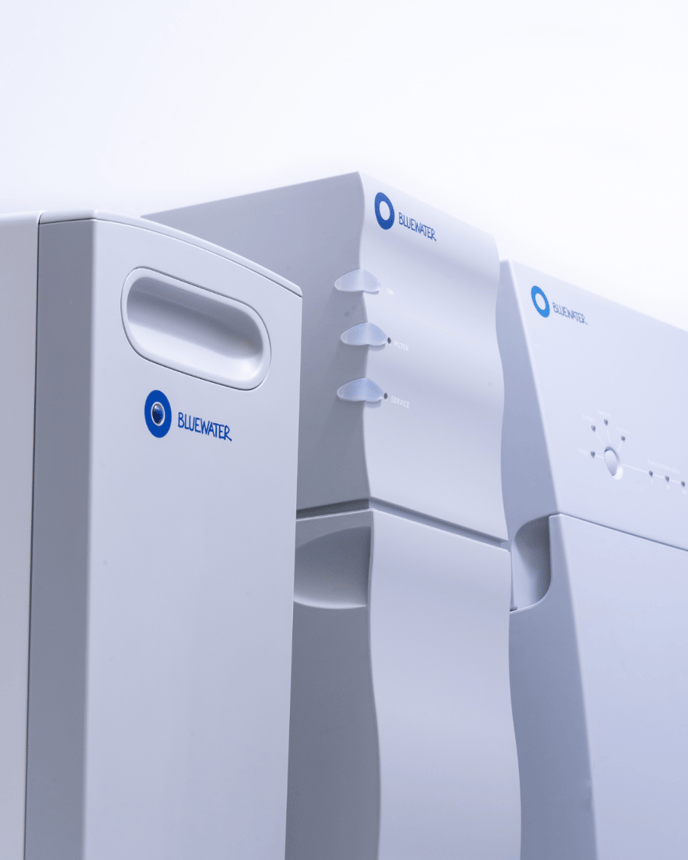
In order to avoid TDS creep being built up, all Bluewater purifiers perform an automatic clean flush every 6 hours. The machine then takes a small amount of inlet water to rinse out the membrane and replace the water inside the membrane vessel. By doing so, you will never have a large build-up of TDS creep. - TDS indicators on the machine.
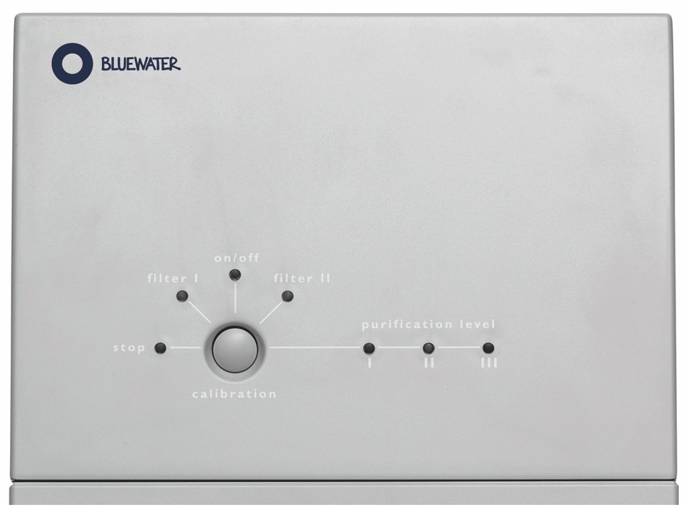
All Bluewater machines are fitted with TDS indicators on the front. At the beginning of each production cycle, either triggered by you opening a faucet or if the pressure drops in a connected tank, the machines will indicate how pure the water is. By following these indications you will be able to tell when the machine has removed the TDS creep in the membrane.
- On the Cleone, the front LED will blink when being below 85% purification. Once it reaches above this threshold, it will stop blinking.
- The Spirit blinks on the "Service" LED when it is below 85% purification. Once it stops blinking, it has reached above this threshold.
- The Pro has three LEDs indicating different purification levels: Purification I is lit when below 50%, Purification II is lit when below 85%, and Purification
III is lit when above 85%
- Pro rinse valve. The Pro CV-series rinse valve automatically monitors both inlet and outlet water quality, diverting any water that falls below Purification Level III before it reaches your tap or storage tank.
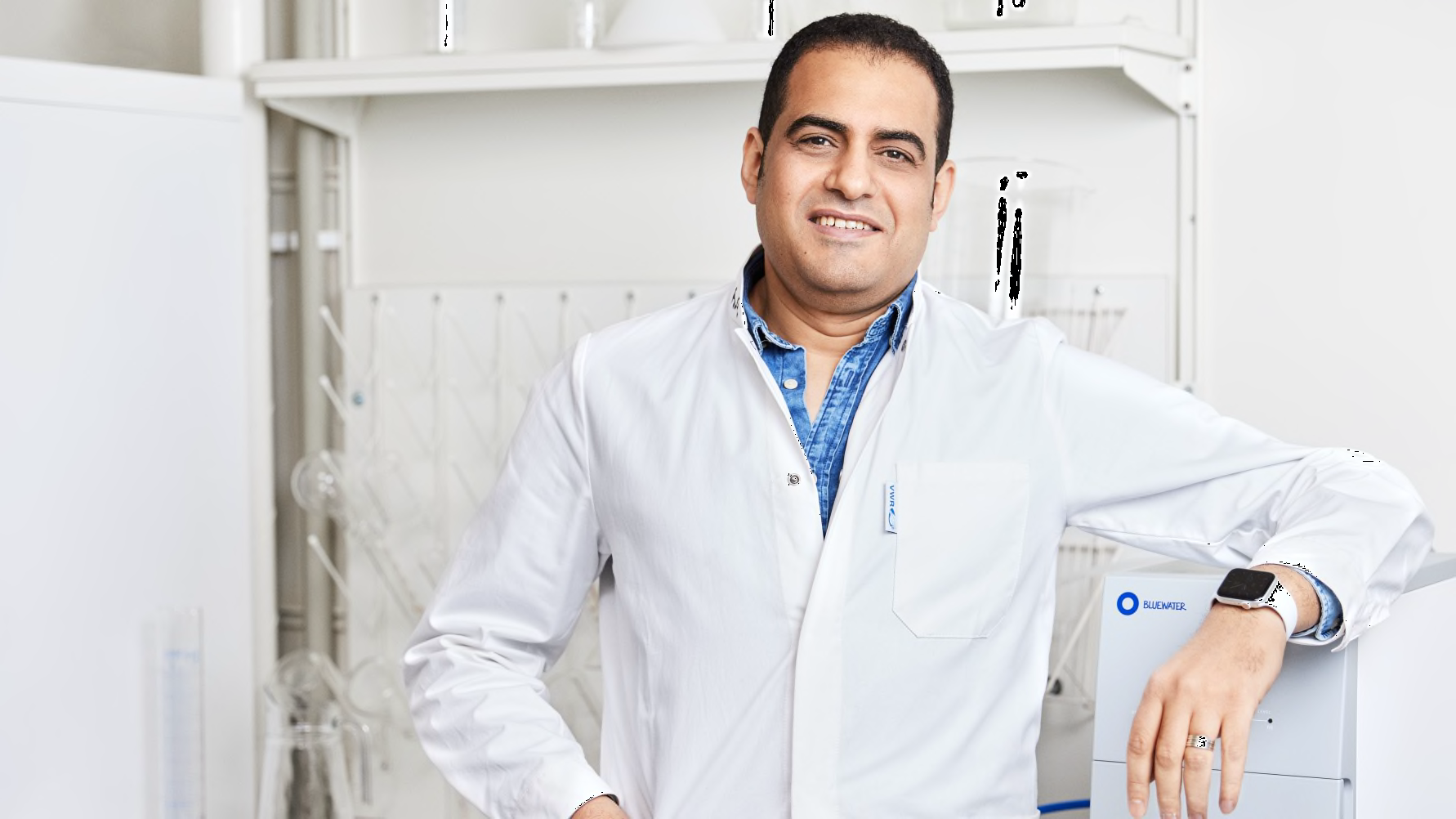
For applications that require the highest water purity at the point of delivery — such as laboratory, pharmaceutical, or aquarium use — the Pro CV-series is the ideal solution. The Pro CV-series is equipped with a pure water rinse valve that continuously measures both inlet and outlet water quality, automatically discarding any water that falls below Purification Level III. This guarantees that every drop delivered by the machine meets the highest purity standard — a critical safeguard when using downstream storage tanks, which can harbor impurities introduced with incoming water.
If you have an application where you need the absolute best water immediately, choose the Pro CV-series.